



The wrong evaluation report can delay an otherwise strong U.S. graduate school application and choosing correctly starts with confirming the program’s exact requirements.
Compare credential evaluation report options
A credential evaluation for graduate school explains international academic records in terms a U.S. university can review. The correct report depends on the program’s instructions: some need general degree equivalency, while others need course, credit, grade, GPA, or academic-level detail. Confirm the report type, evaluation service, required documents, and delivery method before ordering.
Knowing what the evaluation does makes it easier to spot requirements that could otherwise cost time, money, or an application deadline. First, we will answer “What is a credential evaluation for graduate school?” and explain how admissions teams use it before comparing available report types. The path begins with:
What is a credential evaluation for graduate school?
A credential evaluation for graduate school explains how education earned in another country compares with education in the United States. It gives an admissions team a clear way to review degrees, academic records, and related documents from unfamiliar education systems.
The report does not admit or reject an applicant. Instead, it helps the receiving school understand the applicant’s academic background. The school then applies its own admission guidelines, program standards, and document policies.
What the evaluation shows
At minimum, an evaluation states the US equivalency of an international credential. Depending on the report type, it may also list courses, credits, grades, and a calculated grade point average.
This sort of assessment puts academic records into terms that a graduate admissions office can use. It may help staff check whether an applicant meets degree or course requirements. Applicants seeking admission can learn more about evaluations for higher education before choosing a report. They can also review International Education Evaluations’ background and evaluator expertise.
Who uses the report
Graduate admissions teams use evaluation reports when they need more context about international education. Academic departments may also review the report when a program requires certain courses or a related prior degree.
Each receiving institution decides how it will recognize foreign qualifications, and it is the evaluation that supports that decision. It does not replace the school’s review.
Why requirements must be checked first
Before ordering, applicants should ask the graduate school which report type and document delivery method it accepts. Some schools want a general comparison. Others need a course-by-course report with grades and credits.
Applicants should also confirm whether the school needs official records sent by an institution or another approved source. Asking first can prevent delays and avoid ordering a report that the program cannot not use.
Course report vs. divisional course report
When choosing a credential evaluation for graduate school, start with the receiving institution’s written guidelines. The report names may sound similar, but the school may require a specific type of report, and it is wise to ask both the graduate admissions office and your target department before ordering.
The key difference to confirm
A course report and a divisional course report should not be treated as interchangeable without the institution’s approval. While a course report by International Education Evaluations (IEE) provides you with a breakdown of the course titles, US equivalent letter grades, and converted US credits, a divisional course report goes one step further, and highlights those courses that can be considered upper-division. These are the more advanced components of a degree, and are typically taken in the 3rd or 4th year of study. IEE lists both options on its evaluation service page, so applicants can review the available report types before confirming a choice.
Ask whether reviewers only need course-level details or if they require that the upper-division coursework be highlighted. This step matters because requirements can differ between departments, even within the same university.
When does detailed course analysis matter?
Prerequisite review
A course-by-course evaluation can be especially useful when applying to graduate programs that require specific prerequisite coursework. If an applicant’s undergraduate degree is in a different field, a detailed review of their completed courses can help the program determine whether their academic background meets its entry requirements. In cases where the specific field of study is less of a concern, a different report type may be sufficient.
GPA and credit interpretation
Academic systems do not all record grades and credits in the same way. A detailed report can present each course in terms the receiving school can review, as well as a calculated GPA to confirm an applicant’s overall performance.
Department-specific decisions
Requirements can differ within the same university. One department may accept a general evaluation, while another may need course details for prerequisites or credit review. Some programs may also use their own application process instead of the university’s general process.
A clear written answer can prevent a mismatch between the report and the department’s review process. If the school lists several accepted options, ask which one fits your program and intended use.
How to confirm your graduate program’s requirements
Confirm the requirements before you order a credential evaluation for graduate school. A careful check can prevent you from choosing the wrong report or delivery method.
Start with the official pages
- Read the central graduate school page. Find the university’s rules for international applicants, and be sure to look for graduate applicant’s specifically. Sometimes, requirements for undergraduate and graduate applicants may differ. Note any instructions about evaluations, transcripts, translations, deadlines, and document delivery.
- Check your program’s admission page. Individual departments may have their own requirements, in addition to what is posted on the university’s admissions page. Review for your degree and term, then save the link or take a screenshot.
- Compare the two sets of instructions. Look for differences in the required report, approved agencies, and delivery method. If the pages conflict, do not guess. Ask the program – not the admissions office – for clarification.
- Ask focused questions. Email the graduate admissions office and your program contact. Ask whether they require a course-by-course analysis or if a document report is sufficient. If a course-by-course analysis is required, do your upper-division courses needed to be highlighted? Also confirm approved agencies, required documentation, and whether translations must be included.
- Confirm how the report must arrive. Ask whether the school accepts an electronic report, a sealed paper copy, or both. Confirm the correct recipient, email address, mailing address, and application ID to include.
- Keep the answer in writing. Save the reply with your application records. Before ordering, compare that answer with the available credential evaluation options and enter the recipient details exactly as provided.
Questions that remove doubt
Use plain, direct questions in your email. Ask, “Which evaluation agencies do you accept?” and “Which report type should I order?” Then ask whether the evaluator or applicant must send the report.
Include your full name, intended program, start term, and applicant ID. These details help staff give an answer that fits your file, rather than a general reply.
Why written confirmation matters
Admissions decisions belong to the receiving school. An evaluation agency prepares the report and recommends an equivalency, but the graduate program ultimately decides who and what it will accept.
Requirements can also differ between programs at the same university. Keep the dated reply and review it once more before placing your order. If an instruction changes, ask the school to confirm the new requirement in writing.

Which documents should you prepare?
Start with the graduate program’s instructions
Before ordering a credential evaluation for graduate school, check the rules for each program on your list. The school may name an evaluation type and/or delivery method. Follow those directions even if another school asks for something different.
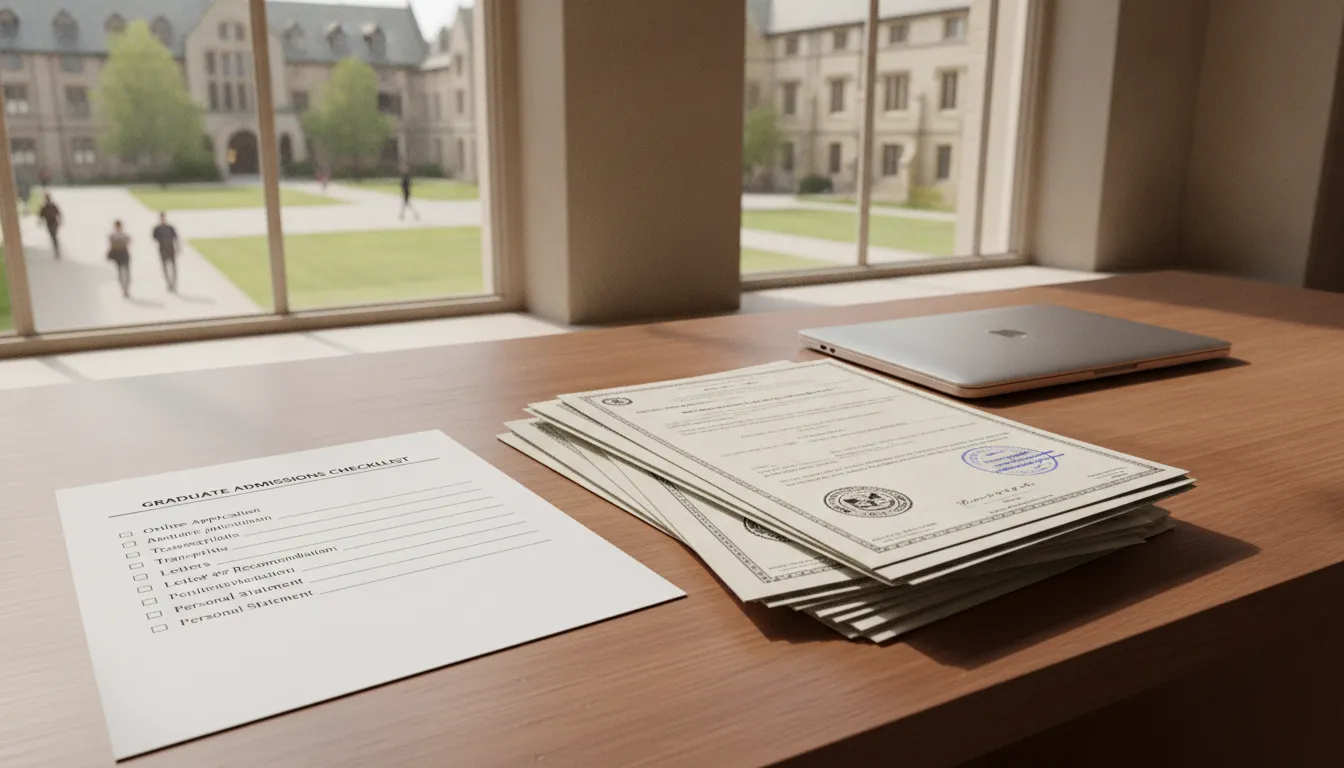
Make a simple checklist for each application. Record the deadline, required report type, accepted delivery method, and any special instructions.
Gather your academic records
Most applicants should begin by collecting records for each postsecondary institution they attended. Review IEE’s documentation requirements for guidance tied to your country of education. Then compare that guidance with the instructions from your evaluator and graduate program.
Check that every page is clear, complete, and easy to read. Names, dates, and credentials should match across your records. If your name appears differently on separate documents, gather any supporting record the school or evaluation agency requests.
Confirm translations and delivery rules
Do not assume that one translation or delivery rule applies everywhere. Some recipients may accept applicant-uploaded copies, while others may require records sent through an approved channel. A program may also set its own rules for translations, seals, envelopes, or electronic records. Be sure to periodically refer back to the document requirements for your country of education while preparing your files.
Ask two direct questions before you submit anything: who must send each document, and which translation format is accepted? If official delivery is required, contact the issuing institution early. Processing times and available delivery options can vary, so leave room to fix missing or rejected records.
Keep digital copies of every item you submit, along with receipts and tracking details. Use clear file names that include the institution and document type. This small step helps you answer questions quickly without confusing one graduate application with another.
How should you plan your evaluation timeline?
Work backward from each deadline
Start with the date when each graduate program must receive your completed application. Then ask whether the credential evaluation must arrive by that date. Some schools may let you apply first and send the report later. Others may require every item before they review your file.
Build a simple calendar for each program. List the application deadline, the report deadline, and the date you plan to order. Leave extra time between these dates. That buffer can help if a school takes longer to send records or asks you to correct a document.
Do not use one deadline for every application. Each graduate program may have its own review schedule and delivery rules. A program may also have separate dates for admission, funding, and assistantship review. Confirm which date applies to your credential evaluation for graduate school.
Allow time to collect documents
The evaluation itself is only one part of the process. You may first need to gather academic records, translations, or other items requested for your case. Ask your former school how it sends records and how long that process may take.
Before placing an order, review pricing and service options once more and compare. Choose the report and delivery method that match the graduate program’s instructions. If you are unsure, confirm the required report type with the program before you pay.
Check every document before you submit it. Make sure names, dates, and school details are easy to read. If a record is not in English, check the stated translation rules. Clear files can reduce avoidable questions after your order begins.
Check delivery rules before ordering
Do not assume every university receives reports in the same way. Ask each admissions office where the report should go and whether it needs a reference number. Also confirm whether you or the evaluator must send it.
Record the answer for each school in your calendar. Include the correct email address, mailing address, portal details, and any applicant number. This step helps you choose delivery options with care and avoid sending a report to the wrong office.
Track the order after submission and watch for messages about missing documents. Respond as soon as you can, since an incomplete file can delay the next step. Keep copies of your order details and each program’s delivery instructions for easy reference.
Common mistakes to avoid before you order
A credential evaluation for graduate school can take planning, especially when each program sets its own rules. A careful check before ordering can prevent delays, added costs, and a report the school cannot use.
Ordering before confirming the report type
Do not assume every graduate program wants the same report. One school may request a simple document report, while another may need a course-by-course report. Ask which report type and supporting records the program requires before you place an order.
Confirm the rules with both the graduate admissions office and your academic department. Central admissions may review general eligibility, while the department checks courses or prerequisites.
Sending incomplete or incorrect documents
Missing pages, unclear scans, and unofficial records can stop a review. Check that names, dates, grades, degrees, and translations are easy to read. If a record is not in English, ask whether the evaluation agency needs both the original and a translation.
Submitting more files does not fix a missing required record. Follow the evaluation agency’s instructions and choose the report requested by your program.
Choosing the wrong delivery plan
A completed report still must reach the right place. Some programs accept a copy from the applicant, but others require direct delivery from the evaluator. Confirm the recipient, address, email, application ID, and delivery method before ordering.
Do not wait until the application deadline to start. Document requests, translations, school closures, and delivery can add time beyond the report review. Work backward from the deadline, then leave room to correct a rejected file or update the recipient.
Keep proof of each requirement in one place. Save emails from admissions, screenshots from the program page, and your order details. This record makes it easier to answer questions without relying on memory.
Review evaluation report options and pricing
Frequently Asked Questions
Can I use one credential evaluation for multiple graduate schools?
You may be able to send one completed credential evaluation to multiple graduate schools if they require the same type of report and accept evaluations from the same agency. Delivery rules can also differ by program. Before ordering extra copies, confirm each school’s report requirements, accepted evaluation provider, recipient details, and delivery method. A report prepared for one program may not meet another program’s requirements.
Does a credential evaluation guarantee admission to graduate school?
No, a credential evaluation does not guarantee admission to a U.S. graduate school. The report explains how international academic records compare with U.S. education. The university and academic department still decide whether an applicant meets their admission standards. They may also review grades, prerequisite courses, test scores, recommendations, experience, and other application materials before making a decision.
Is a credential evaluation the same as an official transcript?
No, a credential evaluation and an official transcript serve different purposes. A transcript is the academic record issued by an educational institution. An evaluation explains that record in terms a U.S. school can review. Some graduate programs require both documents and may set separate delivery rules for each. Confirm whether the transcript must come directly from the issuing institution or accompany the evaluation.
Can a credential evaluation report be updated after it is completed?
An evaluation provider may allow an update when new academic records become available or a receiving school requests more information. The available options, fees, and document rules depend on the provider and the requested change. Contact the evaluator before submitting new records. Also ask the graduate program whether an updated report will satisfy its requirement and how the revised report must be delivered.
Ready to choose the right evaluation report?
Choosing the wrong report can delay your application, add avoidable costs, and leave you rushing to meet a graduate program’s documentation requirements later. Starting now gives you time to confirm what each school accepts, prepare every required record, and address questions before important deadlines get close. Selecting the right report early helps you submit a complete credential evaluation with confidence and keep each part of your graduate application moving forward.